Most traders who journal do not improve from it.
That sounds harsh. But it is the honest version of what happens when traders log trades without a structured weekly trade review process. They accumulate data, entry prices, exit prices, profit and loss, and then scroll through it periodically without extracting anything that changes how they trade the following week.
A weekly trade review is the process of turning a week of trade data into a short list of decisions that improve the next week.
The journal becomes useful only when it stops being a record of the past and starts becoming a tool for shaping the future.
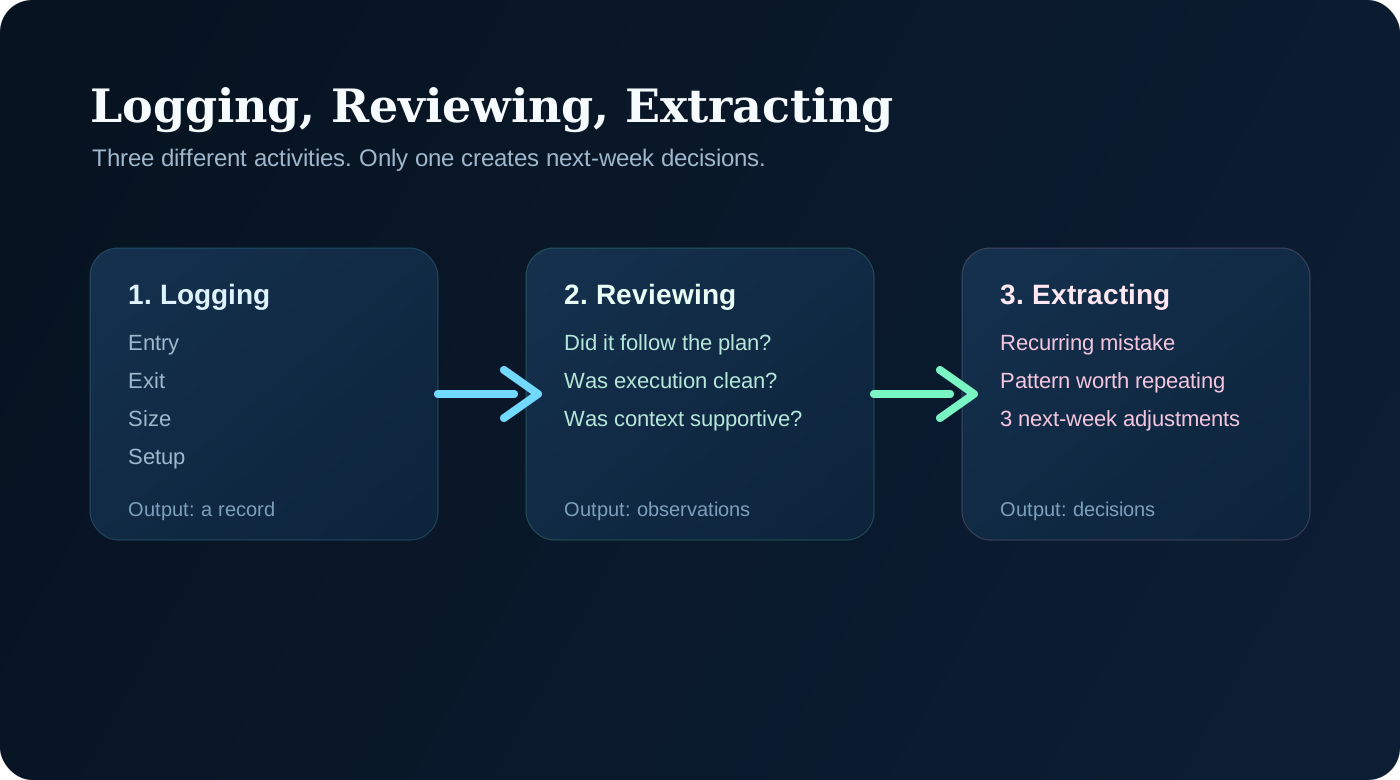
This article is about fixing that. Specifically, it is about the difference between logging trades, reviewing trades, and actually extracting decisions from that review. These are three separate activities. Most traders do the first. Very few do all three.
If you do not yet have a consistent journaling habit, start with the TradInvest guide on building a trading journal. This article picks up where that one ends.
Why Most Weekly Reviews Fail
The most common version of a trade review looks like this. A trader opens their spreadsheet or journal at the weekend, looks at the week's P&L, identifies the two or three trades that went wrong, thinks "I should have been more patient" or "I overtrade on Fridays," closes the journal, and moves on.
Nothing changes the following week. The same patterns repeat.
This fails for a specific reason: the review produced an observation, not a decision. "I overtrade on Fridays" is not actionable. "I will not take more than two trades after 2:00 PM on Friday, starting next week, and I will track compliance" is actionable. The first is a feeling. The second is a rule that can be tested.
A weekly review that ends with a list of observations but no list of decisions is not a review. It is a confession. And confessions, in trading, change nothing.
The second reason most reviews fail is that they focus almost entirely on outcomes, did the trade make money, rather than on process, was the trade the right decision given what was known at entry? A trade that followed your rules and lost is a different category of trade from one that broke your rules and happened to make money.
A useful review separates process from outcome, produces specific decisions, and creates a short list of things to do differently, not a long list of things to regret.
Logging, Reviewing, and Extracting: Three Different Activities
Before building a review framework, it is worth being precise about what each activity actually is.
Logging is data entry. You record what happened: ticker, direction, entry, exit, size, P&L, setup type. This is necessary but not sufficient. A log with no analysis is an archive.
Reviewing is reading the log with intention. You are looking at each trade and asking whether the decision was correct given your rules, whether execution matched intention, and whether the outcome was consistent with what the setup implied.
Extracting is the productive step most traders skip. It means looking across the week's trades as a dataset and identifying patterns. Where are you consistently underperforming your own rules? Which setup types are working and which are not? Are emotional patterns showing up in sizing or exit behaviour? What does this week's review tell you to do differently next week?
Extraction turns individual trade reviews into compounding process improvements. Without it, you are reviewing the same mistakes indefinitely.
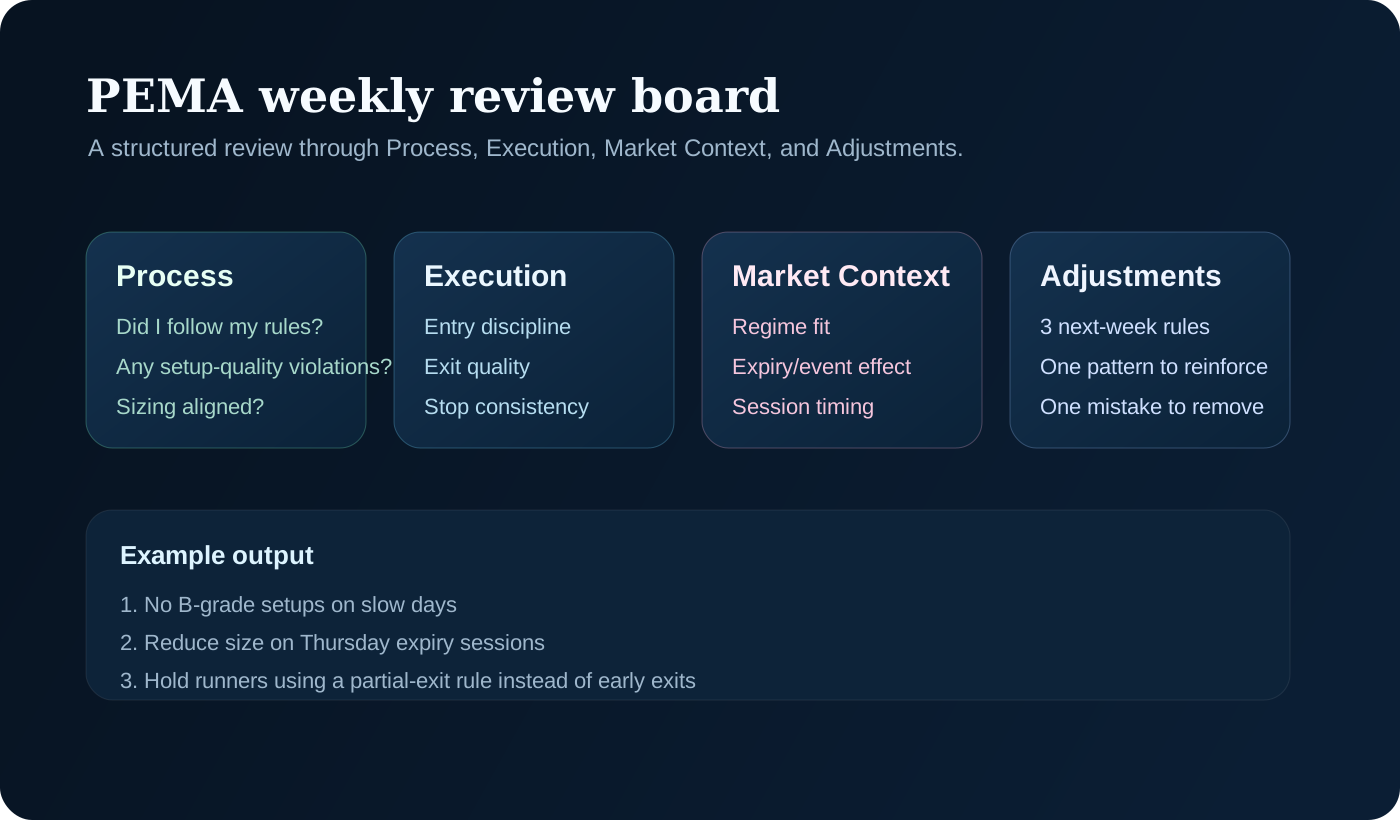
The PEMA Framework: Four Lenses for Weekly Review
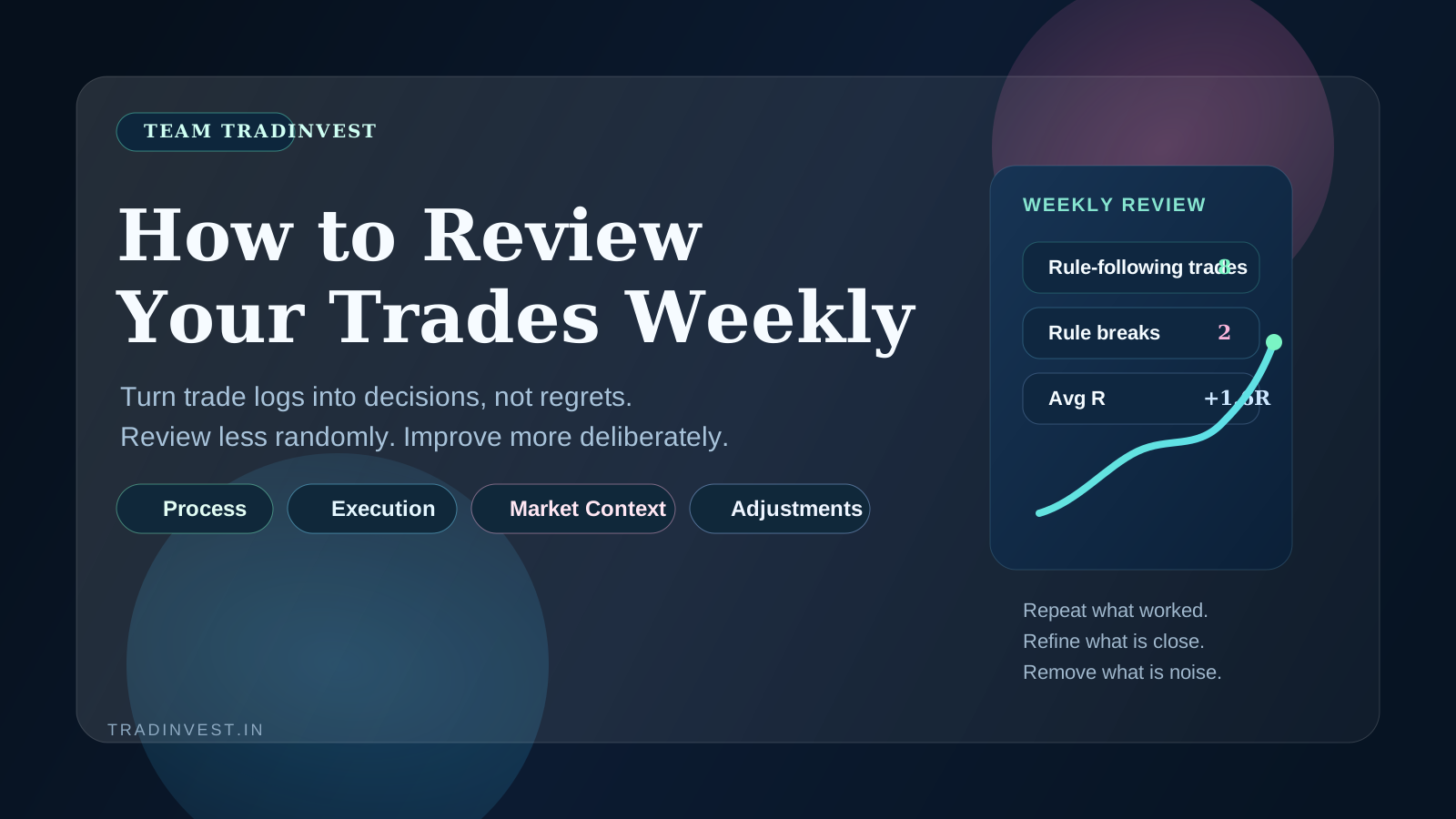
A structured weekly review does not need to be long. It needs to be thorough across the right dimensions. The PEMA framework organises a weekly review into four lenses, each of which surfaces a different category of improvement.
P: Process (Did you follow your rules?)
For each trade, evaluate whether the entry matched a defined setup, whether sizing followed your position sizing rules, whether the exit was planned or reactive, and whether any rules were bent or broken.
Process review is the most important lens because it is the only one fully within your control. A week with five losses from rule-compliant trades is a better trading week than a week with five winners from undisciplined decisions. The first week was unlucky. The second was a risk that happened to pay off.
E: Execution (Did your actions match your intentions?)
This lens goes one level below process. Even when a setup is valid, execution can still be poor, entering too early, chasing after the level has moved, sizing inconsistently across similar setups, exiting too early, or holding a losing trade past the plan.
Execution errors are different from rule violations. They are often faster, more instinctive, and harder to see in the moment. Reviewing them weekly creates a picture of where your in-session behaviour diverges from your pre-session intentions.
M: Market context (Was the week's environment appropriate for your strategy?)
Not every market week is suitable for every trading style. A range-bound week is a lower-probability environment for trend-following setups. An event-heavy week, budget, quarterly results, expiry, creates volatility patterns that may not match the conditions your strategy is calibrated for.
The market regime framework is the right reference here. If your weekly review regularly shows poor results during certain regime conditions, that is a signal to trade smaller or step back, not a signal to try harder in those conditions.
A: Adjustments (What specifically changes next week?)
This is the extraction step. At the end of the other three lenses, you write down no more than three specific, testable adjustments for the following week. Not aspirations. Not intentions to "be more disciplined." Specific rules: a setup you will not trade, a time window you will avoid, a sizing rule you will enforce, a behaviour you will track for compliance.
If a review does not produce at least one Adjustment, it has not been completed. The Adjustment is the output that justifies the time spent.
Worked Example: The Same Week, Two Different Reviews
Consider a trader who had five trades in a week: two winners, two losers, one breakeven. Net P&L is slightly negative after fees.
The unproductive review
The trader looks at the week, notes the two losing trades, observes that both were in the same sector that sold off unexpectedly, concludes "bad luck with sector news," and closes the journal. No decision is made. The following week, the same patterns are available to repeat.
The productive review under PEMA
Process lens: Both losing trades were valid setups by the rulebook. Both winners were also rule-compliant. The breakeven trade, however, was an entry that did not meet full criteria. One process violation identified.
Execution lens: The first winner was exited at the first sign of pullback, well before its planned target. The second winner ran to target. The pattern is early exits on trades that are working, a recurring theme.
Market context lens: Three of the five trades were taken on Thursday, an expiry session. The two losers were both from Thursday. In the two prior expiry sessions, the same deterioration in setup quality appeared. Context finding: expiry sessions are a risk environment where the strategy underperforms.
Adjustments for next week
- No B-grade setups. If the market is slow, do not trade.
- On Thursday expiry sessions, reduce position size by half and take only A-grade setups.
- On winning trades that hit halfway to target, do not exit early. Use a partial-exit rule and hold the remainder to target.
Three specific, testable, forward-looking adjustments. The following week, compliance with each can be tracked. Improvement becomes measurable, not aspirational.
What to Measure in Your Weekly Trade Review
A complete weekly review covers six dimensions.
Setup quality. For each trade, ask: was this an A-grade setup, a B-grade setup, or a marginal entry? If most of your trades are B-grade or lower, you are overtrading relative to the opportunities the market actually offered.
Execution quality. Compare intended entry to actual entry, intended stop to actual stop, and intended target to actual exit. The gap between intention and action tells you where your discipline is weakest.
Sizing consistency. Check whether your position size was consistent with your rules across all trades, or whether you sized up on impulsive trades and sized down on good ones.
Emotional patterns. Were any trades taken out of boredom, frustration, revenge after a loss, or FOMO after missing a move? If yes, label them explicitly. Patterns only become visible if they are named consistently. The article on stopping revenge trading goes deeper on this.
R-multiples and risk consistency. Calculate the R-multiple for each trade. A week where winners average 2R and losers average 1R is structurally different from a week where winners average 0.8R and losers average 1.5R. The R-multiple framework is the right lens for this.
Repeated mistakes. Maintain a short list of your top recurring mistakes and check whether any of them appeared this week. If the same mistake survives four weeks of review, your adjustment is not specific enough.
For Indian Traders: Why the Weekly Review Matters More Here
Indian markets have structural features that make an undisciplined weekly review especially costly.
Expiry weeks concentrate risk. Weekly and monthly F&O expiry sessions create volatility patterns that are distinct from normal sessions. If your review does not track expiry versus non-expiry performance, you may average out a meaningful source of underperformance.
Event-driven sessions produce overtrading. RBI policy weeks, Union Budget days, and major corporate results can produce fast moves that trigger impulsive decisions in traders whose process is not designed for high-volatility conditions.
Recovery trading after fast losses. Indian intraday markets can move quickly against a position, and the urge to recover the loss in the same session is common. Weekly review that explicitly labels "recovery trades" helps quantify how much this behaviour is costing.
Session-time patterns matter. The first 30 minutes and last 30 minutes of Indian sessions have distinct volatility and liquidity profiles. Your review should reveal whether you are trading the right setups at the wrong times.
How to Turn Review Into Action
A review session that produces observations is journaling. A review session that produces decisions is coaching.
The output of a useful weekly review is a short, specific list of things that will be different next week. Not a long list. Three items maximum. Each one should be:
Specific. "Trade better" is not specific. "Do not enter any trade in the first 15 minutes of the session" is specific.
Testable. You need to be able to check compliance at the end of each day.
Time-bound. Treat each adjustment as a one-week experiment. At next week's review, evaluate whether it held and whether it improved outcomes.
Write the three adjustments in a visible place before the following week begins. Some traders put them at the top of their trade plan. Some tape them to their monitor. The location matters less than the habit of reading them before each session starts.
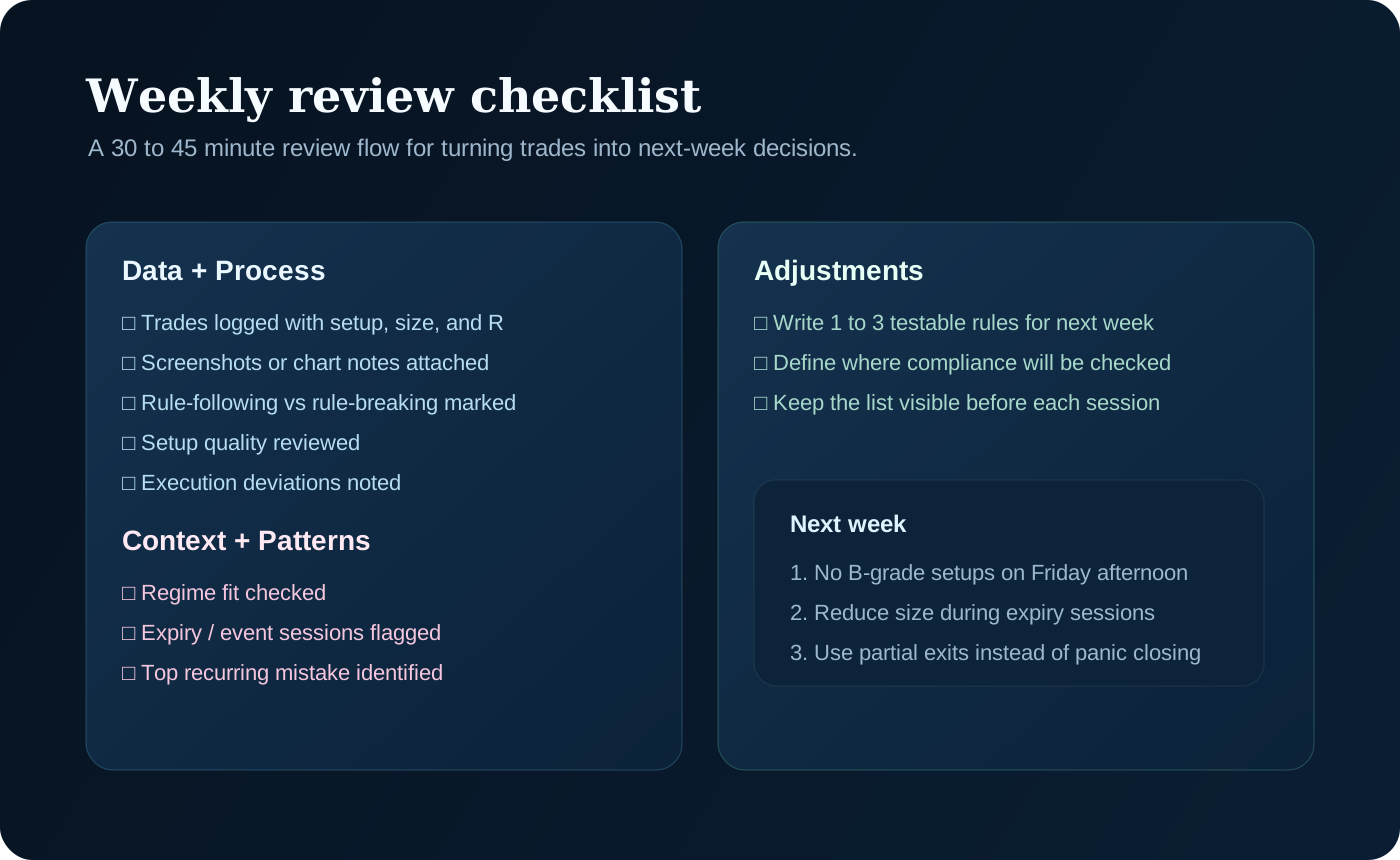
The Weekly Trade Review Checklist
Run through this list at the end of each trading week. For a typical week of five to fifteen trades, the whole process should take roughly 30 to 45 minutes.
Data preparation
- All trades for the week are logged with entry, exit, size, setup type, and R-multiple
- Screenshots or chart annotations are attached where useful
Process review
- Mark each trade as rule-compliant or rule-violation
- Note any setups taken below your quality threshold
- Calculate the percentage of trades that were rule-compliant
Execution review
- Compare intended versus actual entry, stop, and exit
- Identify where in-session behaviour diverged from the plan
- Note early exits, late stops, or sizing deviations
Market context review
- Note the market regime for the week
- Identify any event-driven or expiry sessions and how trades performed on those days
- Check whether the week's environment actually suited your strategy
Pattern identification
- Check whether any of your top recurring mistakes appeared
- Identify the single most impactful error of the week
- Note any positive execution patterns worth reinforcing
Adjustments
- Write no more than three specific, testable adjustments for next week
- Update your recurring mistakes list if needed
- Set one positive intention based on what worked this week
Side-by-Side: Logging vs Reviewing vs Extracting
| Activity | What You Do | Output | Usefulness |
|---|---|---|---|
| Logging | Record trade data: ticker, entry, exit, P&L | A historical record | Necessary but not sufficient |
| Reviewing | Read the log and assess each trade against your rules | Observations about individual trades | Useful if done honestly |
| Extracting | Look across all trades for patterns, then write specific decisions | 2 to 3 testable adjustments for next week | Where real improvement comes from |
Common Mistakes in Weekly Trade Reviews
Reviewing only the losers. Winners that broke rules are just as important as losing trades that followed them.
Conflating bad outcome with bad decision. A rule-following trade that lost is not the same thing as a rule-breaking trade that happened to work.
Making the review too long. A 30 to 45 minute process done every week beats a huge review session done irregularly.
Never updating your recurring mistakes list. If the same mistake appears every week, awareness is not the issue anymore. The adjustment is weak.
Skipping the adjustment step. This is the most common failure. Without the adjustment step, the review is a performance, not a process.
Key Takeaway
A weekly trade review is not about looking at what happened. It is about deciding what will be different.
The PEMA framework, Process, Execution, Market context, Adjustments, gives every review session a consistent structure that covers the dimensions that actually drive improvement. The output is not a longer list of observations. It is a shorter list of specific, testable decisions.
Thirty to forty-five minutes done consistently every week, with honest assessment across all four lenses and a real commitment to the Adjustment step, compounds into measurable process improvement over time.
If you want to continue this workflow, the natural next reads are How to Build a Trading Journal, How to Stop Revenge Trading, and R-Multiple Mastery. If you want to see how this connects to the product side, review TradInvest features, TradInvest Edge, or the current pricing page.
Spread the good words
Give your view.
Give your view
Comments
0Use this insight inside the product
TradInvest is built to connect market context, strategy quality, and post-trade learning. Read the market with Pulse, narrow your watchlist with rotation and momentum, then review what actually worked.
Related posts
More insight tied to the same trading workflow.