Most traders who keep a journal still trade the same way six months later. Not because journaling does not work, but because they are logging the wrong things, reviewing at the wrong time, or treating it like a diary instead of a diagnostic tool.
A trading journal is not a record of your profits and losses. It is a structured system for identifying where your decision-making breaks down and where it holds up under pressure. If your journal cannot answer the question "why did I take that trade and was that logic sound in hindsight," it is not doing its job.
This article is a practical guide to building a trading journal that actually changes how you trade, with specific attention to common mistakes Indian retail traders make and a simple review framework you can repeat every week.
What Is a Trading Journal, Really?
A trading journal is a structured log of your trades combined with the reasoning, market context, and emotional state behind each decision, reviewed regularly to identify patterns in both performance and thinking.
That last part is what most traders skip.
The "log" part is easy. Most platforms will export a CSV of your executed trades. What makes a journal powerful is the annotation layer: what were you thinking when you entered, what did the setup look like at the time (not after), what was your plan for the trade, and did your execution match that plan.
A journal without that annotation is just a brokerage statement with extra steps.
Why a Trading Journal Matters More Than You Think
Markets will occasionally reward poor decisions. That is what makes trading psychologically difficult: feedback is noisy. You can make the right call and lose money. You can make a sloppy call and make money. If you are not reviewing your process separately from your outcomes, you will eventually learn the wrong lessons.
A disciplined trade review process filters that noise. Over a meaningful sample of trades, it reveals:
- Which setups you actually execute well versus which ones you think you execute well
- Whether your losses are coming from bad setups or poor execution of good setups
- Whether your position sizing is consistent or driven by conviction bias
- Where emotional decisions cluster (post-loss revenge trading, weekend gaps, FOMO during momentum moves)
For Indian traders dealing with high-volatility stocks, F&O expiry dynamics, and news-driven intraday moves, the ability to separate "the market did something unexpected" from "I made a process error" is particularly valuable.
How to Maintain a Trading Journal: The CATE Framework
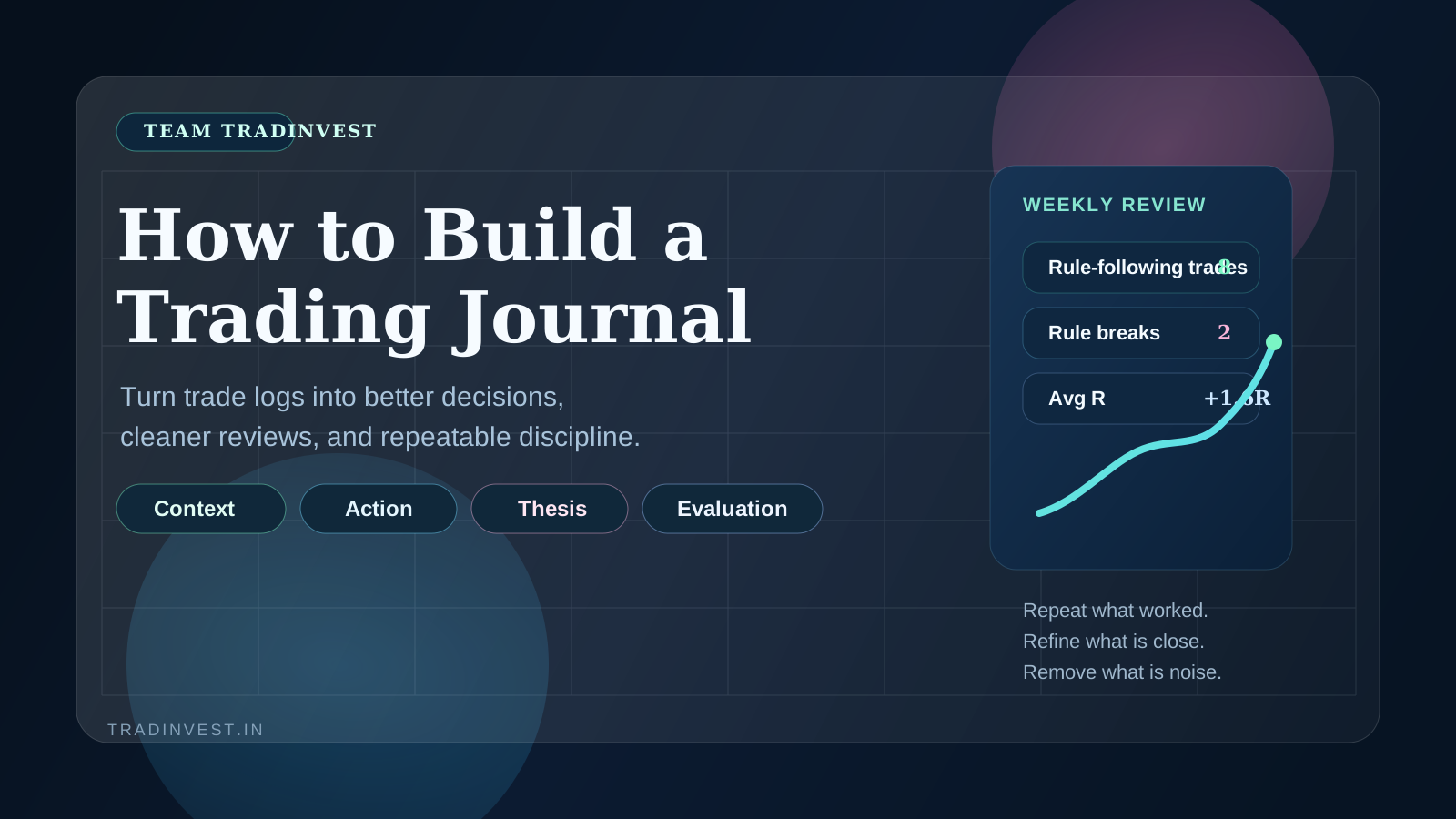
If you want your trading journal to improve decision-making, each trade should be reviewed through four lenses:
- Context: What kind of market was this? Trend, breadth, volatility, sector tone, and event risk
- Action: What exactly did you do? Entry, stop, size, and execution choices
- Thesis: What was the trade idea? Why this setup, in this stock, at this time?
- Evaluation: Was the decision good, independent of whether the trade made money?
This is the difference between journaling for memory and journaling for improvement. Context explains the environment. Action captures execution. Thesis makes your reasoning auditable. Evaluation tells you whether the process deserves repetition.
1. Log Before the Market Opens
Pre-market notes are often more valuable than post-trade notes. Write down:
- The market context: index trend, global cues, any key macro events
- Your watchlist for the day and why those names are on it
- Your personal state: sleep quality, stress level, anything that might affect discipline
This creates a baseline you can measure your actual decisions against. If you planned to avoid trading in the first 30 minutes but entered a trade at 9:18 AM, the pre-market note becomes a data point about where your rules break down.
This is also where broader market context belongs. If you already use a market pulse model built on trend, breadth, volatility, and liquidity, log that bias before the open. If you need a cleaner framework for that, TradInvest explains the public logic in its guide to TIP Factors.
2. Log at Entry, Not After the Close
Memory is reconstructive. If you wait until the end of the session to log your trades, you will unconsciously revise your reasoning to match what happened. Log your entry logic immediately or within a few minutes of placing the trade.
At minimum, capture:
- The setup type (breakout, pullback to support, trend continuation, mean reversion, etc.)
- Your entry trigger and why you acted now rather than waiting
- Your initial stop loss and target
- Position size and why you chose that size
- Confidence level (1 to 5) and why
3. Post-Trade Annotation
After the trade closes, add a second layer:
- Did the trade play out as expected? If not, what actually happened?
- Was your execution clean or did you move your stop, exit early, or add to a losing position?
- Was the outcome consistent with the quality of your decision, or was it noise?
This two-layer approach, entry reasoning plus exit review, is what separates a diagnostic journal from a simple log.
A Bad Journal Entry vs a Useful Journal Entry
Most traders know they should journal. Fewer know what a useful journal entry actually looks like.
Weak entry:
- Bought ABC because it looked strong
- Exited because price got weak
- Lost money because market was choppy
That tells you almost nothing. The setup is vague, the trigger is vague, and the review pushes responsibility onto the market.
Useful entry:
- Setup: Opening range breakout after strong prior-day close
- Context: NIFTY above VWAP, breadth positive, sector leading
- Thesis: Expected follow-through in first hour if opening range high broke with volume
- Action: Entered on breakout, stop below opening range low, size fixed at 1R risk
- Evaluation: Thesis was valid, but entry was late after the second expansion candle. Decision quality was average, not high
That entry can actually improve your next trade. It tells you whether the problem was setup quality, timing, sizing, or emotional execution.
4. Weekly Review: The Core of the Process
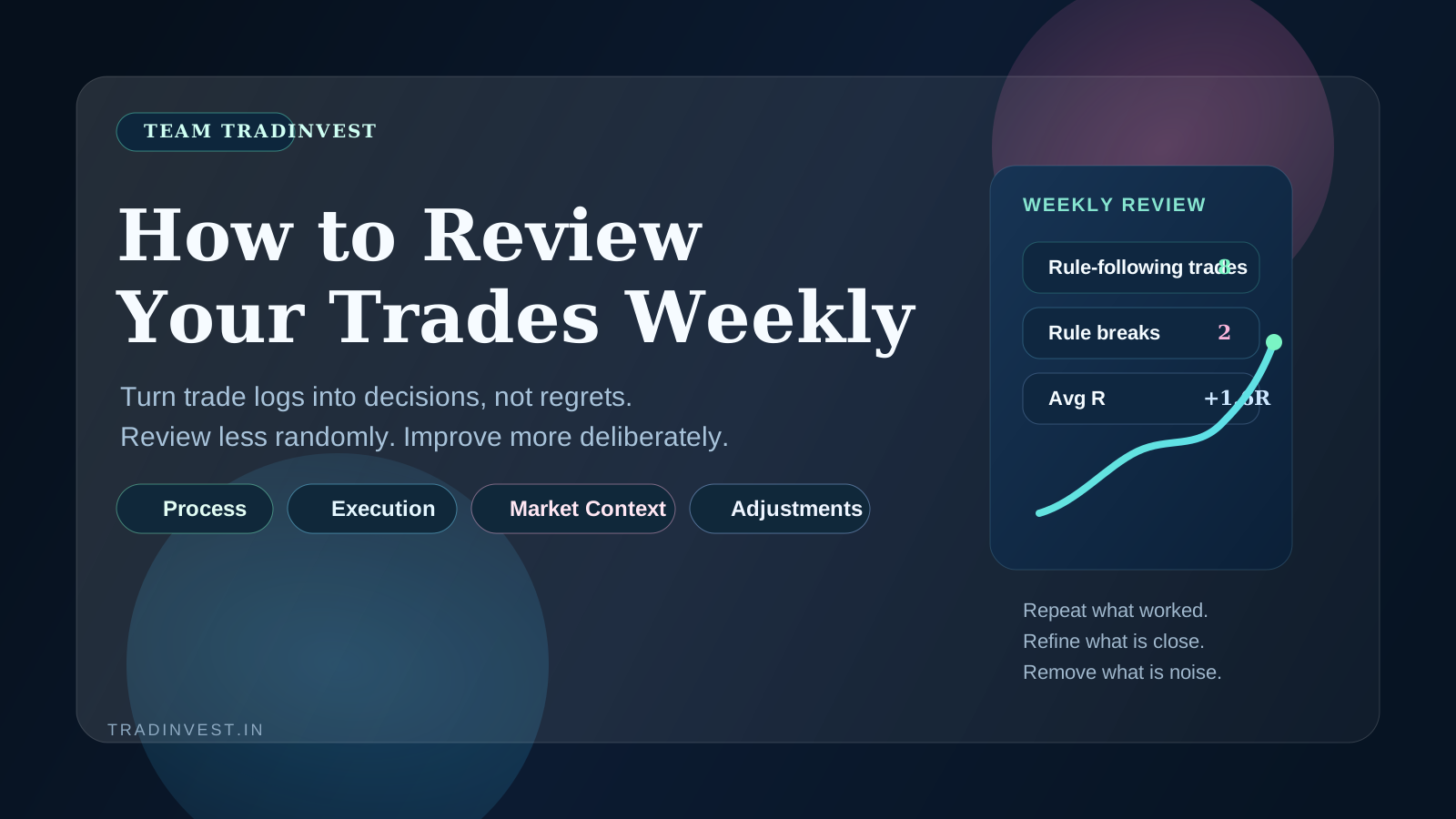
Daily journaling is data collection. The weekly review is where insight happens.
Block 60 to 90 minutes every weekend. Go through every trade from the week. Ask:
- Which trades followed my rules exactly?
- Which trades were rule violations? What triggered the violation?
- What is my win rate and average R on rule-following trades versus rule-breaking trades?
- Are there setup categories where my edge is stronger or weaker?
The goal is not to feel good or bad about the week. The goal is to find one or two patterns you can act on. That compound over months into genuine improvement.
Trading Journal Mistakes That Erase Progress
Logging Only Losing Trades
Many traders only open their journal after a bad day. This creates a skewed dataset. You need to log winning trades just as carefully, because winning trades sometimes reflect poor process that happened to work out, and you want to catch that before it causes a large loss.
Writing the Story After the Outcome
If you log your reasoning after you already know the result, you will rationalize. "I entered because of a strong breakout" sounds different when the trade is up 3% versus down 2%. Log your reasoning in real time, even if it is rough.
Reviewing Metrics Without Reviewing Decisions
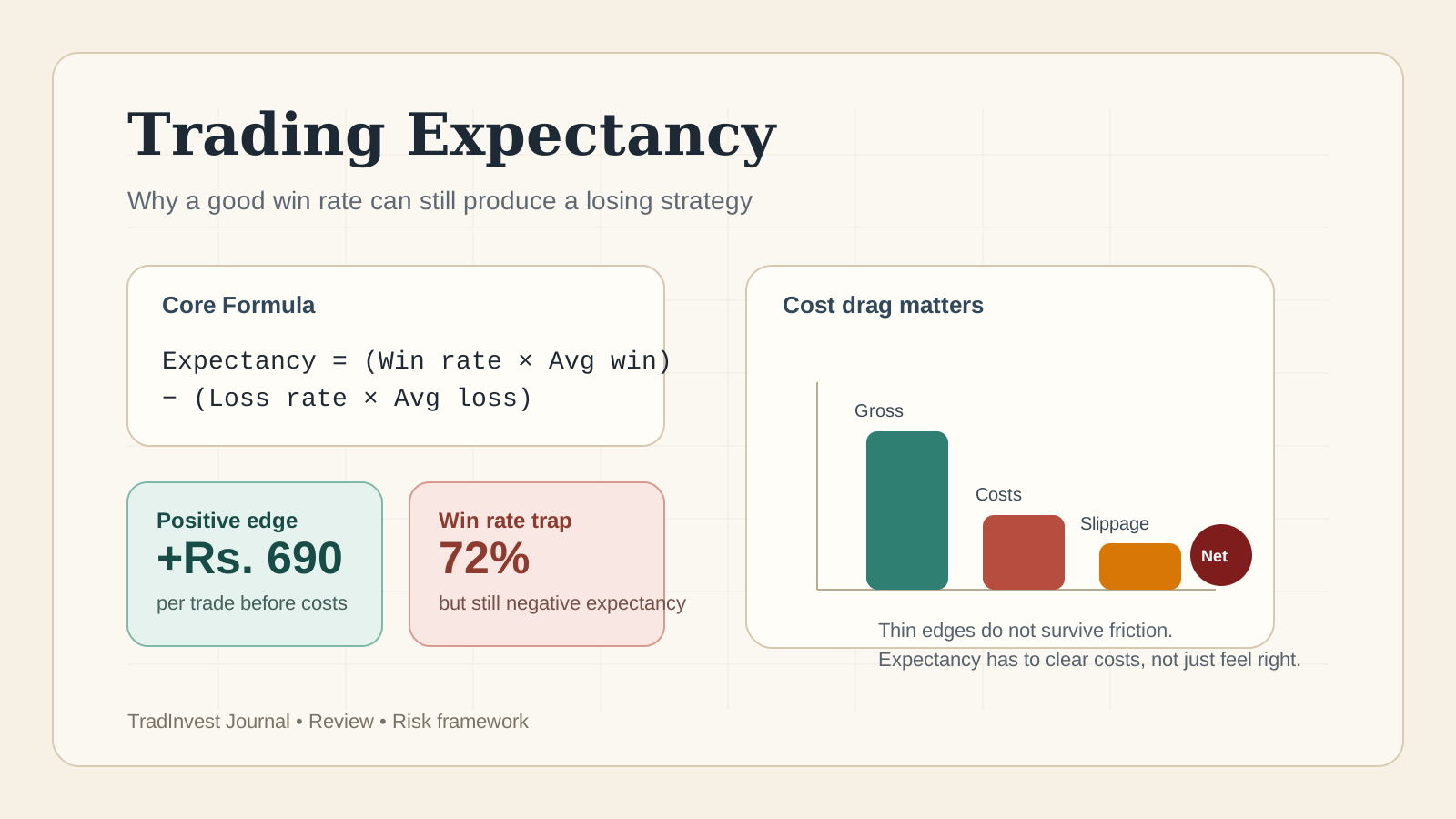
Tracking your win rate, average R, and expectancy is useful. But metrics without decision review tell you what happened, not why. A 42% win rate does not tell you whether your losses came from bad setups or from cutting winners too early. You need the annotated trades to answer that.
Treating the Journal as Punishment
Some traders only journal when they feel they made a mistake, which means the journal becomes associated with guilt. Review good trades. Review average trades. The journal should be a neutral diagnostic tool, not a self-criticism session.
Not Accounting for Market Context
A setup that works well in a trending market may fail repeatedly in a choppy one. If you do not log the broader market context at the time of each trade, you cannot separate "my edge is not working" from "my edge does not apply in this market regime."
For Indian Traders: Context That Belongs in Your Journal
The Indian market has some structural characteristics worth tracking explicitly in your journal:
- Expiry dynamics: F&O weekly and monthly expiry weeks often show different behavior. Track whether your setups perform differently around expiry.
- Pre-open session gaps: Large gap-ups and gap-downs can trigger emotional decisions. Log how you handled the gap and whether your response was in your plan.
- News and results season: Earnings surprises and macro events from RBI policy meetings to Union Budget announcements create noise. Note when you are trading in a high-news environment and whether your discipline holds.
- Sector rotation: If you trade stocks across multiple sectors, note which sector each trade belongs to. Over time you may find you have a stronger edge in certain sectors. TradInvest's sector rotation tools can help you cross-reference this with broader sector momentum data.
A Simple Trading Journal Checklist
If you want to build the habit before building the perfect system, start with this minimum viable checklist for each trade:
At Entry:
- Setup type
- Entry price and trigger
- Stop loss level
- Target and R:R ratio
- Position size
- Market context (index trend, sector tone)
- Confidence level (1-5)
At Exit:
- Exit price and reason
- Was the exit planned or reactive?
- Did execution match the plan?
- Outcome in R-multiple terms (see our guide on R-multiple mastery for why R is a better metric than rupees)
Weekly Review:
- Rule-following trades vs rule-breaking trades
- Win rate and average R by setup type
- Emotional patterns: where did discipline slip?
- One insight or rule adjustment for next week
If you want one more layer of discipline, add a final weekly column called: Repeat, Refine, Remove.
- Repeat: what clearly worked and deserves more repetition
- Refine: what is promising but still inconsistent
- Remove: what keeps showing up as noise, impulse, or low-quality execution
Key Takeaway
A trading journal improves your decision-making only if it captures your reasoning in real time, tracks execution quality separately from outcomes, and feeds into a structured weekly review. The traders who improve consistently are not the ones who trade more or study more charts. They are the ones who understand their own error patterns well enough to systematically reduce them.
Where TradInvest Fits In
If you are doing all of this in spreadsheets, notes apps, and memory, the friction adds up quickly. That is usually when journaling becomes inconsistent.
TradInvest is useful when you want structured trade logging, cleaner setup review, and analytics tied back to market context instead of keeping those pieces separate. You can explore the full product on tradinvest.in/features, review plans at tradinvest.in/pricing, and pair your trade review process with concepts like R-multiple mastery.
The journal is the foundation. The review is the engine. Build both deliberately.
Spread the good words
Give your view.
Give your view
Comments
0Use this insight inside the product
TradInvest is built to connect market context, strategy quality, and post-trade learning. Read the market with Pulse, narrow your watchlist with rotation and momentum, then review what actually worked.
Related posts
More insight tied to the same trading workflow.